MIT builds AI that can see crystal structures in 3D
A new model combines atomic geometry with language so machines can help discover better materials.
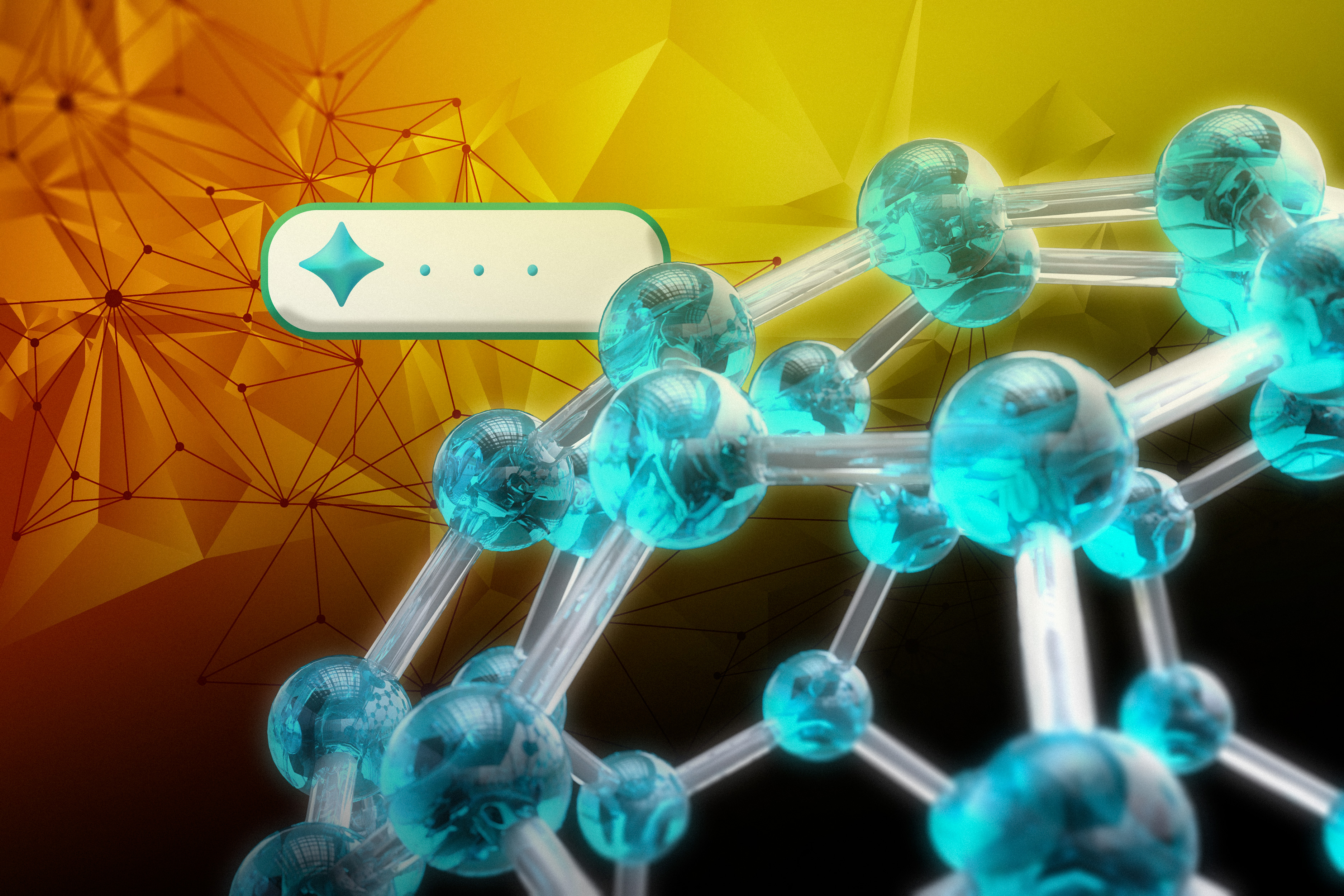
Seeing crystals in three dimensions
Materials scientists spend years hunting for the right crystals — highly ordered arrangements of atoms that make up more than 90 percent of solid materials on Earth — but a new AI model from MIT researchers could speed that search dramatically by letting machines "see" atomic structures the way a human would.
Published in Nature Communications, the system takes 3D atomic layouts and pairs them with natural-language descriptions pulled from experimental papers and computational databases, creating a richer understanding than models trained on text alone 1.
Most existing AI approaches treat crystals as 3D graphs, but they miss the visual and geometric nuance that matters when you want to predict how a material will behave 1. The MIT team wanted to close that gap.
How the model learns
The researchers trained the system using a technique called contrastive learning, in which the model compares similar and different examples of crystal structures alongside their textual descriptions, gradually learning to align the two until it understands how geometry maps to language — much like how the visual and language regions of the brain work together 1.
Instead of relying solely on what had already been published, the team synthesized new narratives that wove together composition, structure, properties and potential uses into unified descriptions 1. That choice mattered: when tested against a version trained only on paper text, the narrative-trained model was better at predicting function .
What it can do
When the researchers asked the model to find crystals suited for solid-state lithium-ion battery electrolytes, its top results lined up with materials that other researchers had independently flagged as promising 1. The model also learned geometric representations of crystal structures that text-only systems could not, pointing to a deeper grasp of atomic arrangement and bonding patterns .
Ju Li, the Carl Richard Soderberg Professor in Power Engineering at MIT, said the work was driven by the belief that structure lies at the heart of materials science 1. "If you understand the structure, you can infer quite a lot about the properties and performance of materials," he said .
The research team also included first author Yang Jeong Park, a former MIT postdoctoral researcher; Mayank Kumaran, a recent computer engineering graduate from the University of Illinois Urbana-Champaign; Chia-Wei Hsu, who holds a SM from MIT; and Elsa Olivetti, the Jerry McAfee Professor in Engineering at MIT's Department of Materials Science and Engineering.
Why it matters
Finding new materials has traditionally been a slow, trial-heavy process. By giving AI a clearer picture of how atoms are arranged in 3D and linking that to real-world properties and applications, the model could help researchers identify better candidates faster — potentially accelerating development of batteries, semiconductors and other technologies that depend on advanced crystals 1.
Olivetti said she hopes the approach will become a useful tool the broader community adopts as the field moves toward deeper algorithmic integration 1. "There are sometimes these step changes within materials science around algorithmic integration toward useful tools, which the community uses to further advance the field," she said .
The road ahead
For now, the system has been tested on specific property searches and battery-related materials, but the researchers say the approach is designed to work broadly across classes of crystalline compounds rather than targeting just one application 1. As materials datasets grow and multimodal models mature, the same framework could eventually let scientists describe what they need in plain language and receive a shortlist of crystal structures that fit .
That vision — a future where finding the right material is as simple as asking the right question — is still ahead, but this model marks a meaningful step toward making it real.
Key facts
- Crystals make up more than 90 percent of solid materials on Earth.
- The model was trained using contrastive learning to align 3D atomic structures with text descriptions.
- It outperformed text-only models when asked to find materials for solid-state lithium-ion battery electrolytes.
- The research was published in Nature Communications.
- MIT researchers synthesized new narrative descriptions rather than relying solely on existing paper text.
Sources
- Giving AI a “crystal clear” view of the materials world
- Sodium-ion battery — en.wikipedia.org
Related stories
 PeopleEmTech Future 2026 Explores How AI Meets EverythingHerald of AI
EmTech Future 2026 Explores How AI Meets Everything
Speakers at MIT's latest tech conference explore how AI is reshaping science, industry, and daily life through convergence with other fields.